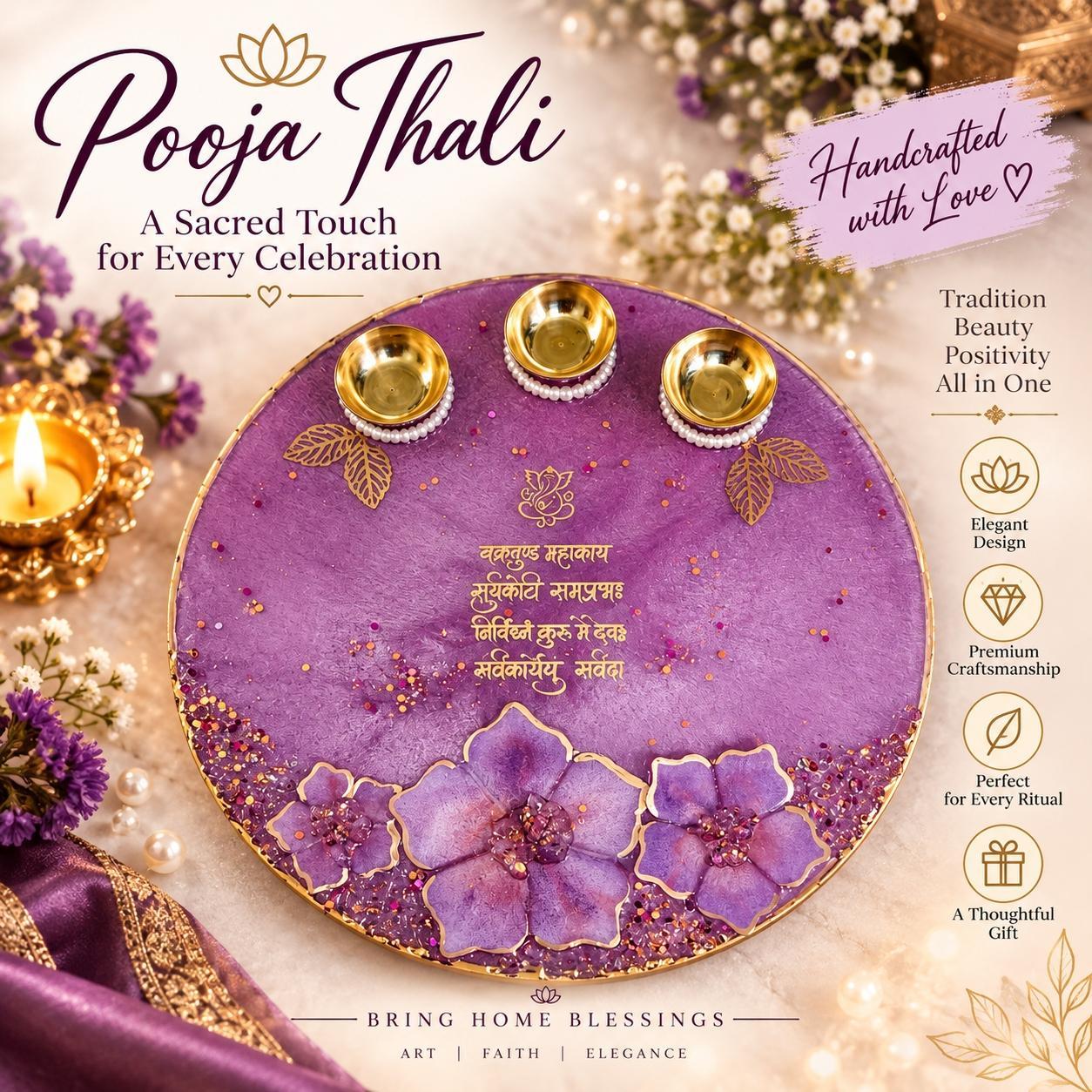
Look closely at many VEDUMI pieces and you'll notice it: a thin, irregular vein of shimmering gold running through the resin, catching light in a way no paint or metallic pigment quite replicates. That's genuine gold leaf — one of the oldest decorative materials in existence, used in an entirely contemporary way.
What Gold Leaf Actually Is
Gold leaf is gold hammered into sheets so thin they're almost weightless — a technique with roots going back thousands of years, used historically in everything from religious icons to royal manuscripts. In resin art, small fragments or full sheets are placed into the resin during the pour, where they settle and suspend permanently once the piece cures.
The Technique
Gold leaf is applied at a precise moment in the pouring process — added too early and it can sink or distort; added too late and it won't bond properly with the surrounding resin. It's typically layered between colour pours, so the gold appears to run through the piece rather than sitting on top of it.
Why It Carries Extra Meaning in India
Gold has particular cultural and symbolic weight in Indian tradition — associated with prosperity, auspiciousness, and celebration, from wedding jewellery to festival decor. Incorporating real gold leaf into a resin piece — especially for wedding keepsakes, pooja thalis, or housewarming gifts — taps into that same symbolism, giving the piece meaning beyond its visual appeal.
Where You'll See It Most
- Earth & Gold collection pieces, where it's the central design element
- Varmala and wedding keepsakes, often as a border or accent detail
- Pooja thalis, echoing traditional brass and gold tones
- Geode-style pieces, as a banding detail between colour layers
A Living Detail
Because gold leaf settles naturally during the pour, its exact placement is never fully controlled — which means every gold-leafed piece has its own unique pattern, impossible to exactly replicate even by the same hands.