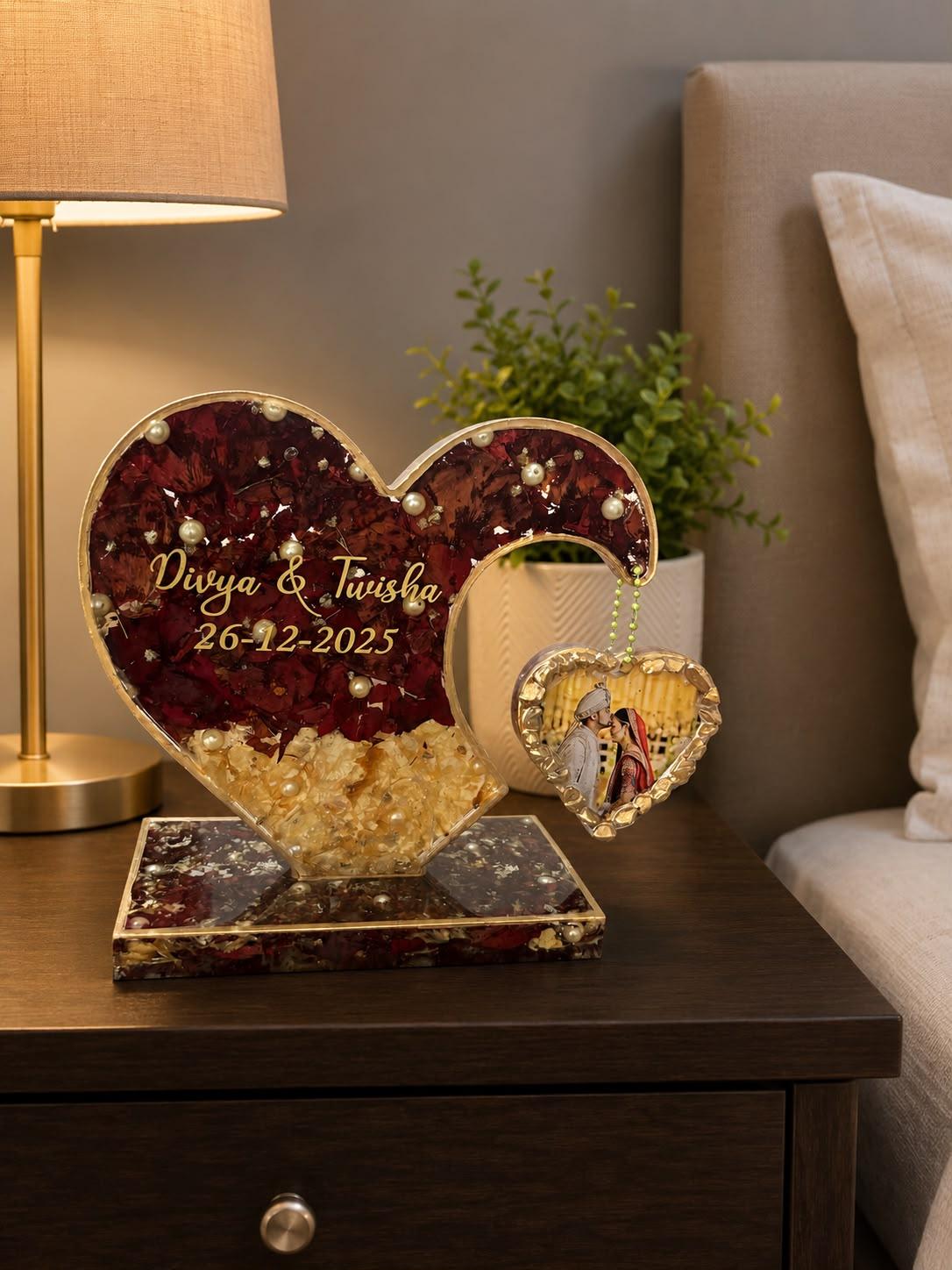
If you've ever asked "what exactly is resin art made of?" — you're not alone. Epoxy resin is one of those materials people recognise on sight (that glassy, almost liquid-looking finish) without necessarily knowing what it actually is.
The Short Answer
Epoxy resin is a two-part synthetic material: a resin and a hardener. On their own, both are liquid. Mixed together in the correct ratio, they trigger a chemical reaction that gradually transforms the liquid into a solid, glass-like, extremely durable material. This transformation is called curing, and it isn't something that happens instantly — it's closer to baking than painting.
Why the Two-Part System Matters
The two-part nature of epoxy resin is exactly what gives artists like Heta control over the final piece. Pigments, mica powders, gold leaf, dried flowers, or objects like a wedding varmala can be suspended in the resin during the liquid phase — positioned, layered, and guided — before the mixture locks everything permanently in place as it cures.
How Long Does Resin Take to Cure?
Most resin pieces reach a touchable, tack-free state within 24 hours, but full chemical curing — the point at which the resin reaches its maximum hardness and clarity — typically takes 5 to 7 days, depending on the thickness of the piece, the ambient temperature, and the specific resin formulation used. This is one reason handmade resin pieces genuinely need time: rushing the cure compromises both durability and clarity.
Is Resin Art Durable?
Cured epoxy resin is remarkably hard and long-lasting — it's the same underlying chemistry used in industrial coatings and adhesives. Functional pieces like coasters, trays and tabletops are entirely safe for daily use once fully cured. Its one real vulnerability is prolonged direct UV exposure, which can cause gradual yellowing over years — which is why we always recommend keeping resin pieces out of harsh, constant direct sunlight.
Why Artists Love Working With It
- Depth and dimension — resin can be poured in layers, creating a sense of depth no flat paint can achieve.
- Preservation — flowers, fabric, and keepsakes can be suspended and protected indefinitely.
- A glass-like finish — the cured surface has a natural shine that needs no varnish or sealant.
- Versatility — the same material can become wall art, jewellery, furniture, or a wedding keepsake.
Understanding the material is the first step to appreciating the craft. Every VEDUMI piece — whether it's a simple coaster or a large-scale river table — goes through this same patient chemistry, guided by hand, one pour at a time.